
Bud Break, Held in Balance
BY VINCE VIDRINE
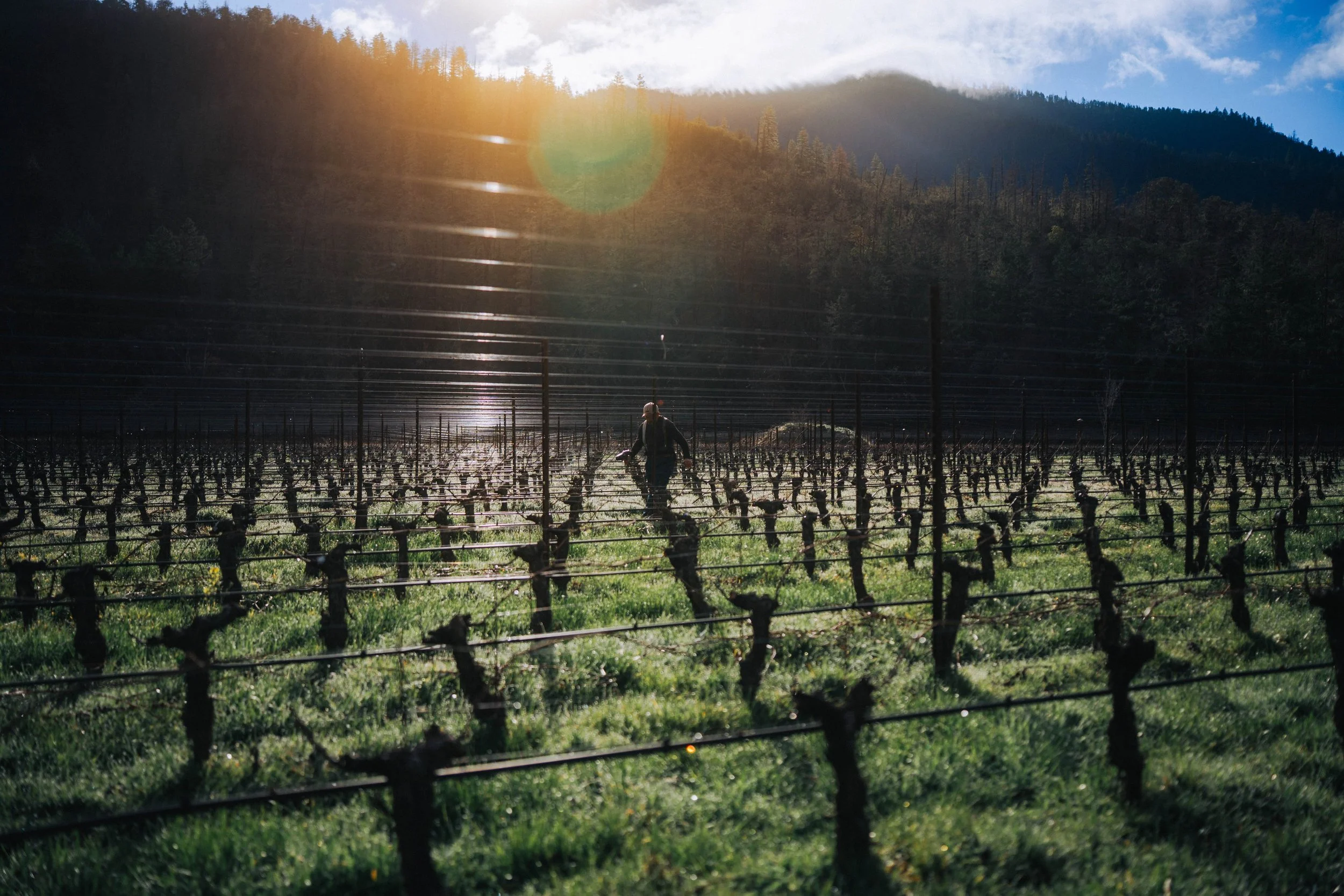
We have finally reached bud break! Sort of… The earlier blocks of Viognier and Syrah broke bud in earnest early last week, followed by the warmer blocks of Grenache later in the week. However, with the cooler temperatures and rain that rolled in, the progression of the season has virtually come to a standstill. The Marsanne, Roussanne, and Mourvèdre buds have barely swelled, and I don’t anticipate full bud break until the last week of the month. Such an interesting start to the growing season, which seemed as though it might usher in a particularly early harvest, is now not a forgone conclusion.
One of the more wonderful things to realize when walking through the vineyard at Cowhorn is that no herbicides, insecticides, or synthetic fungicides have been applied to the property in over twenty years. This fact is so evident during that walk, as whole, lush, verdant swards of grasses and forbs thrive throughout the farm, especially within the vineyard. Varied communities of insects cycle through these cover crops and native plants, living in a mostly unnoticed harmony with the farm ecosystem. And if you don’t mind getting your hands dirty, you can pull back the sod layer and see earthworms and fungal mycelia, and smell that distinctively earthy aroma of healthy soil. There is something indescribably and unmistakably right about the way this vineyard makes you feel.
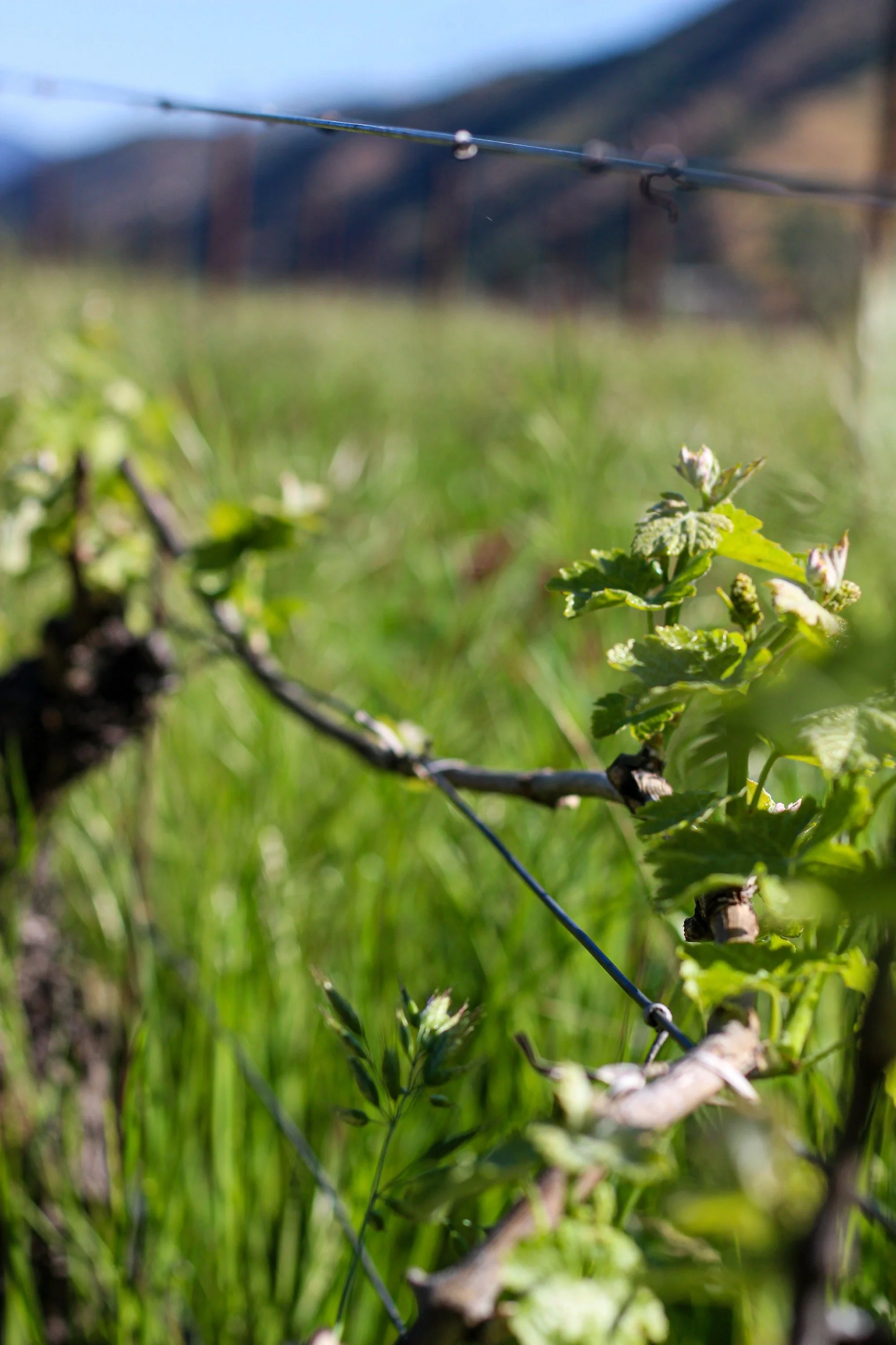
The next realization is that all of these things we can see and smell are connected and natural, and also intentional. All of these individual and interconnected systems of plants, animals, and microbiota are supporting each other and thriving together by providing the fundamental needs to each other in a balanced and sustainable way. Our role in all of these overlapping systems is give and take, as well. We obviously enjoy the wine that we make from the vines’ grapes. And for that (it seems like it should go without saying), we try not to kill anything else. We do have to do some light mechanical weeding and mowing, but we time it so that we can build up organic matter as nutrients for the soil animals, fungi, and bacteria to use. We plant helpful cover crops, including legumes, that pull nitrogen out of the air and leave it in the soil. We make compost from our grape skins and stems, combined with organic cow manure and organic hay, which adds highly concentrated nutrients. We also apply traditional biodynamic preparations that encourage life in our composts and soils. These are something like inoculations or micronutrients that have an exponential effect on the plant and microbial life of the soil. Like the other organisms on the farm, we try to take what we need in balance.
And I think that indescribable thing about the place is the balance. It’s the balance that allows us to use soft touches in the vineyard and not have to fight the other plants, animals, and microbes to grow delicious grapes. It’s the balance that we engage in that allows life to expand in the vineyard while improving vine health and grape quality each year.
Biodynamics allows us to farm grapes in better harmony among the natural systems in the vineyard, promoting better ecosystem health above and below ground. This agricultural method allows for a lasting, sustainable relationship within these systems.